How to Design Your Home Exterior Beautifully (and Securely)
October 29, 2026 · DFW Key Master Team · 5 min read
Most people treat curb appeal and security as two separate projects with two separate budgets. They're the same project. Both are about sightlines, approach, materials and whether a stranger can stand at your door unseen.
Design decisions that look good and make a house harder to hit are not compromises. They're usually the cheaper option too.
The front door is the focal point, and it has to work
Every exterior design starts at the entry. If you're spending on a decorative door, spend on the frame and the hardware behind it at the same time.
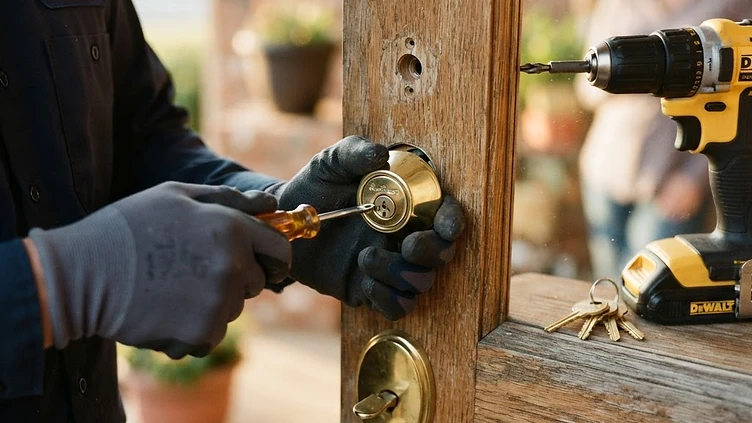
A beautiful door on a frame with a half-inch strike screw is a photo, not a door. What you want: a solid core or well-made wood door, a deadbolt that seats fully, a reinforced strike plate with screws long enough to reach the framing, and hinges anchored into the stud. A painted frame with clean lines looks better than a dented one anyway.
If the entry is recessed, light it. A recessed doorway that's dark after sunset is a hiding spot with good design intentions. Our front door security checklist covers the hardware details.
Landscaping: keep the view, lose the cover
The standard landscape advice is a hedge for privacy. The standard security advice is to cut everything below three feet and keep tree canopies above six, so there's nowhere to stand unseen and no ladder to a second floor.
Both can be satisfied. Keep privacy planting high and set back from the walkway, use low ornamental grasses or groundcover near doors and windows, and avoid a solid hedge running right up to the front wall. Trim regularly; Texas growing seasons mean a tidy border becomes a wall in six weeks.
Thorny foundation planting under windows is a classic deterrent that also looks intentional: roses, pyracantha, holly. Just don't create a tunnel of cover between the sidewalk and the door.
Lighting that earns its place
The best exterior lighting is layered: path lights, a warm fixture at the door, and motion lights at the sides and rear where nobody is supposed to be.
A few practical notes for DFW: use warm-white LEDs in the 2700–3000K range, aim fixtures down and across rather than up into the sky, and make sure the driveway and the side gate are actually lit rather than just the facade. Motion lights should cover the rear patio and the side yard, not only the front.
A lit path also removes trip hazards and makes guests feel welcome, which is why this is the rare upgrade that improves both looks and safety.
Driveways, gates and side yards
A side gate is the most overlooked exterior element. It's cheap to secure and it removes the classic route to the back of the house: gate, side yard, rear door nobody watches.
Fit a hasp and a closed-shackle padlock, or a keyed gate lock on the same key as the house if you use it daily. Keep the gate visible from the house or add a light, and if you park an RV or trailer behind it, don't leave a ladder leaning against the fence.
On the driveway, keep the garage door's emergency release in mind: an unsecured garage door with a manual release that can be hooked from outside through the top panel is an entry point. A zip tie on the release trolley stops the hook method.
Materials that survive a Texas summer
Metal hardware gets hot enough to burn a hand in August, and cheap finishes pit within a couple of seasons. Choose powder-coated or solid brass hardware, avoid plastic keypads on west-facing doors, and use exterior-rated fasteners; builder-grade zinc screws rust and loosen, which is how strike plates come loose.
For doors, understand that heat and humidity make wood swell. If your entry binds in summer, plan a seasonal adjustment into the design rather than fighting it.
The porch, packages and the doorbell
A porch is where deliveries land, and a design that hides the door from the street also hides it from neighbors who might intervene. A doorbell camera or a window with a street view solves this without making the entry exposed.
Add a package bin or ask for deliveries to a side area if boxes pile up. A decorative planter in front of the door is not a secure drop spot, and a pile of boxes is an invitation.
When to call a pro
Call a locksmith when the design calls for hardware you're not sure about: matching a keyed gate to your house key, selecting a handle set that fits an existing prep, reinforcing a frame behind a new door, or fitting a keypad on a west-facing entry. Small hardware decisions made once are much cheaper than redoing them after a season.
We handle residential hardware across Dallas–Fort Worth, from gates and garage entry doors to full key schedules. See our residential services for what's covered, and check the tips for upgrading a property for the order of spending.
FAQ
Does landscaping really affect home security?
Yes. Most break-ins rely on not being seen, and shrubs that block a door from the street provide exactly that cover. Trimming and layered planting is one of the cheapest security improvements available.
What is the best lighting for both looks and safety?
Layered warm LEDs at the entry and along paths, plus motion lighting at the rear and sides. Aim everything downward and keep the side gate lit.
Which door material is best in Texas heat?
Fiberglass and steel core doors resist heat and humidity better than solid wood. Wood is fine with the right finish and seasonal adjustment, but it will swell in summer.
Should my side gate use the same key as the house?
If it's convenient for daily use, yes, and it should be a keyed lock rather than a padlock with a key that gets lost. Just make sure the gate is visible or lit.
Beautiful and secure are the same plan done well. Call DFW Key Master at (682) 666-2966 for the door, frame and gate side.