Common Mistakes That Cause Access Control System Breaches
September 18, 2026 · DFW Key Master Team · 5 min read
Most access control breaches don't start with a break-in. They start with a system that was set up once and never touched again: a shared code that outlived the employee who created it, a door propped open for a delivery, or a badge that was never deactivated because nobody told the person running the software. In Dallas–Fort Worth offices, warehouses and clinics, these quiet gaps cause far more losses than forced entry does.
Here are the six mistakes we fix most often, and what to do instead.
Mistake 1: Credentials that outlive the people using them
A temporary front-desk code created during a remodel in 2022 is often still the code everyone knows today. The same goes for key cards: when an employee leaves, the card gets collected, but the credential stays active in the system because deactivating it wasn't on anyone's checklist.
Every credential should belong to one person. When someone leaves, disable the credential the same day, not the same week. If your software supports it, run an access report at the end of each month and compare it against payroll. Anything that doesn't match is a hole.
Mistake 2: Propped doors and tailgating
The most secure reader in the world is defeated by a wedge of cardboard. Side doors propped for smoke breaks, back doors propped for deliveries, and employees holding the door for the person behind them are the three most common physical gaps we find in DFW buildings.
Hardware fixes work better than signage. A door closer that actually latches, a request-to-exit sensor so nobody needs to prop the door, and a delivery buzzer that lets staff vet visitors without leaving the desk will do more than a laminated "keep door closed" sign. If your building has a dock or a service corridor, walk it during a shift change and see what's propped.
Mistake 3: One master credential for everything
When a single code opens the front door, the server room, the supply closet and the cash office, one leak exposes the entire building. Most small and mid-sized businesses only need two or three access levels: general staff, management and restricted.
Map your doors first, then decide who needs what. The right starting point is the smallest number of levels that still lets people do their jobs. That's also where a proper master key system or a managed software schedule pays for itself; our commercial locksmith services page explains how access levels are typically structured.
Mistake 4: Cheap hardware installed badly
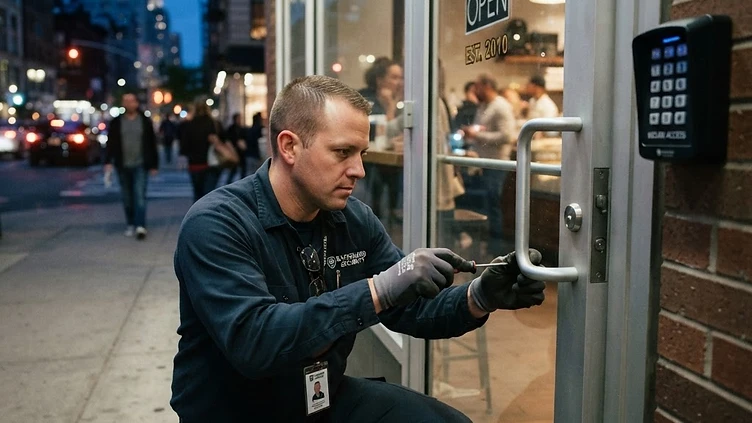
Access control is one of the few trades where the install matters more than the box. A reader mounted so the cable runs through exposed exterior conduit will fail in a Texas summer. A mag lock fitted to a hollow metal frame without reinforcement will work loose within a year. A strike that wasn't set to the frame will bind, and staff will start propping the door to stop the noise.
Two things fix this: hardware rated for exterior Texas heat and humidity if the door faces outside, and an installer who walks the door, checks the closer and tells you what else needs to change. If a quote doesn't include door hardware adjustment, ask why.
Mistake 5: Nobody reads the audit trail
Most systems log every entry. Very few businesses ever read that log. The trail is only useful if someone checks it after an incident, a missing item or an after-hours alarm.
Pick one person to review exceptions weekly: forced-door alerts, repeated failed codes, entries at unusual hours. Ten minutes a week is generally enough, and it's how you catch a problem before it turns into a loss.
Mistake 6: No backup power and no maintenance
Texas storms knock out power, and a system without battery backup will either fail open or stay locked depending on how it was specified, sometimes with people still inside. Batteries also age quietly; a unit that rode out outages in 2022 may not survive one today.
Add battery backup to the plan and have the system checked once a year: batteries, door alignment, closer tension, firmware and the credential list. Commercial doors get used hundreds of times a day, so the commercial door maintenance side of the job matters as much as the electronics.
When to call a pro
Call a professional when credentials need to be reset after a departure, when a door won't latch or the strike buzzes, when you're adding a reader to an existing system, or when nobody on staff knows the admin login anymore. These aren't jobs for a handyman with a drill: a badly fitted strike or an unsupported frame often costs more to repair than the original install.
We handle access control for offices, clinics, warehouses and retail across Dallas, Fort Worth, Irving, Arlington and Grand Prairie. If a system is failing open, locking people in, or you've had a break-in, our 24/7 emergency service is available around the clock.
FAQ
What is the most common cause of an access control breach?
Stale credentials. Shared codes and active badges for people who no longer work there are the most common gap we find. The system is technically working, but the list of people who can open the door is years out of date.
Should every employee have their own code?
Yes. Individual credentials give you an audit trail, so a forced-entry log actually means something, and they let you revoke access in seconds when someone leaves or a phone is lost. Shared codes make all of that impossible.
How often should an access control system be serviced?
Once a year for most offices, and twice a year for buildings with heavy traffic, exterior doors or a loading dock. Batteries, closers, strike alignment and firmware should all be on the checklist.
Can you take over a system another company installed?
Usually, yes. Most mainstream systems let a licensed locksmith take over administration once we have the installer code. If that code is lost, we'll advise on a replacement path that keeps your existing readers and cards where possible.
If you're not sure whether your doors are as tight as they look, call DFW Key Master at (682) 666-2966. We'll walk the building, tell you what's genuinely at risk and give you a firm price before any work starts.