Mailbox Lock Tips and Tricks That Actually Work
December 9, 2026 · DFW Key Master Team · 5 min read
Mailbox locks live outdoors, get used daily, and receive no maintenance at all. That combination produces a small, predictable set of failures, and most of them are fixable in five minutes once you know which part is actually at fault.
Here is what goes wrong, what to try first, and when the answer is simply a new lock.
The key turns but the door won't open
This is the most common mailbox complaint and it is usually not a lock problem at all.
The cam, the flat arm the cylinder turns, has to swing clear of the frame for the door to release. On an older box the cam bends, or the door sags on its hinge, or rust builds up along the door edge. The lock is doing its job; the door is stuck.
Try this: turn the key and hold it turned while pulling the door toward you and slightly up. If it releases, the door is binding and the fix is to free the hinge and clean the frame edge. A drop of light oil on the hinge pin, not in the lock, is the correct application.
If the key turns freely and nothing at all happens, the cam has come loose and is spinning on the cylinder tail. That requires a screwdriver and a look, or a new lock.
The key won't go in, or won't turn
Work in this order, because each step costs less than the next.
Look into the keyway with a flashlight. A surprising number of failures are a piece of grit, a bit of leaf, or a spider's nest blocking the pins. Compressed air or a can of electronics duster, aimed gently, clears it.
Then check the key itself. A worn brass mailbox key loses its cut depth over years, and a worn key in a worn cylinder is the classic combination that works sometimes and not others. Compare it against a spare if you have one.
Then consider the cylinder. Zinc cylinders corrode from the inside in a Texas wet season, and the pins simply seize. If the key goes in only halfway and stops hard, the pins are stuck and no lubricant will reliably free them.
Finally, temperature. A metal box in direct August sun can reach temperatures that make a marginal lock and a marginal key stop cooperating, exactly the reason summer lockout calls spike. Shade the box if you can, or replace the lock with brass or stainless.
What to lubricate, and what never to
Graphite is the correct product for a mailbox lock, applied sparingly and once a year. A puff in the keyway, then work the key in and out a few times.
Never use WD-40 or a general-purpose oil inside the cylinder. It feels better for a week, then collects grit and dust into a paste that seizes the pins harder than before. The same rule applies to door locks, which we cover in our lock maintenance guide.
On the door hinge and the cam, a light machine oil is fine. The hinge is a moving metal part outdoors; it wants lubrication. The keyway does not.
A key snapped off in the cylinder
Common, and usually recoverable. Do not push it further in with a screwdriver or a second key, which is how a two-minute job becomes a replacement.
If a stub protrudes, needle-nose pliers or a pair of fine hemostats can sometimes walk it out. If it is flush, a locksmith has an extractor made for exactly this, and the cylinder survives. Our guide to a key breaking off in a lock covers the technique and the mistakes.
Once the stub is out, clean the keyway and inspect the key. If it broke, it was probably already cracked or corroded thin.
The door latches but won't stay shut
A mailbox door that swings open on its own is a mail-theft risk, not an inconvenience. It usually means the cam is worn to a rounded edge, the strike plate on the box frame has bent outward, or the spring behind the latch has given up.
Bend the strike back into contact with the cam as a first attempt. If the metal is fatigued, a new lock is the honest answer, and it costs less than the mail it protects.
Locks that have been pried or drilled
If a box has been forced, the cylinder housing is usually distorted and no key will ever work smoothly again. Replace rather than repair, and do it the same day, because a box left open advertises that the house behind it may be worth a return visit.
A forced mailbox often precedes a home burglary attempt, since a thief reading mail is looking for names, travel plans and financial documents. If mail has gone missing, treat it as identity theft rather than a hardware problem, and see our guide to mail theft.
Replacing the lock properly
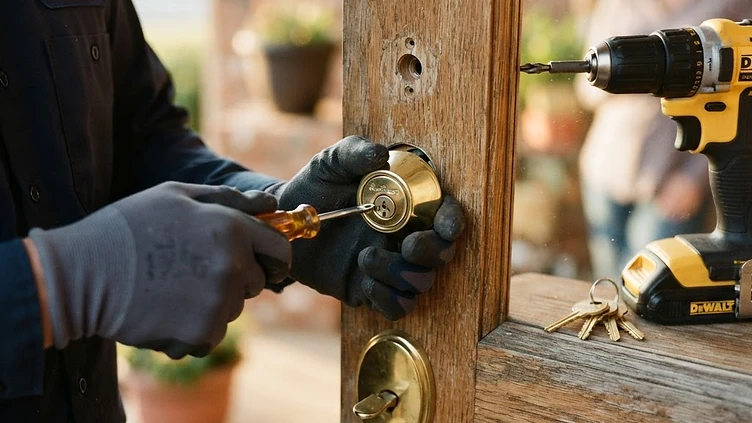
On a curbside box you own, replacement is genuinely a homeowner job: open the door, remove the nut or retaining clip on the back of the cylinder, pull the lock out, fit the new one the same way, and check the cam engages the frame before closing.
Two details matter. First, match the cylinder length to the door thickness, or the cam sits proud and never latches. Second, keep the old key off your ring once it is replaced, and if the box was keyed alike with the house, plan to rekey the house too, which our rekey guide covers.
On a cluster box, stop. Those cabinets are USPS-approved and the lock work runs through the local post office or the property manager, not the resident.
A key that works but lives in the wrong place
The small habit that prevents most mailbox problems: one spare key that lives inside the house, not in the mailbox's own keyhole and not taped under the box. A key left in the lock is how boxes get emptied.
If you have a keypad or a garage entry, keeping the mailbox key inside and the spare with a neighbor beats hiding it anywhere outdoors. DFW heat will also crack a plastic hide-a-key box within a season.
When it is cheaper to just buy the lock
A basic cam lock costs less than a service call. If the fault is a seized zinc cylinder, a worn cam, or a bent key, and the box is a standard curbside model, replacing the lock is the sensible answer and you can finish it before the mail comes.
Call a locksmith when the lock is stuck and the key is broken inside, when the box is keyed to a larger system you need to match, when a cluster cabinet needs work, or when you want the mailbox on the same key as the house.
When to call a pro
Call DFW Key Master at (682) 666-2966 for extraction, replacement or keying a box to match your home. Our residential locksmith team covers the rest of the house, and the types of mailbox locks guide helps you identify what you actually have before you buy anything.
FAQ
Why does my mailbox key only work sometimes?
A worn key, a worn cylinder, or both. Try a newer copy of the key first, then replace the lock if the cylinder is older zinc.
Can I use WD-40 in a mailbox lock?
No. Use graphite. Oil collects dust and grit outdoors and seizes the pins a few weeks later.
My key broke off in the mailbox. What now?
Don't push it deeper. Pliers can sometimes pull a protruding stub, and a locksmith can extract one that is flush without replacing the cylinder.
Can I drill out my apartment mailbox lock?
Don't. Cluster cabinets are USPS-approved and the master lock is theirs. Call the managing office or the post office instead.
Fix the small lock before it costs you mail. Call DFW Key Master at (682) 666-2966.