Door Lock Problems
October 14, 2026 · DFW Key Master Team · 5 min read
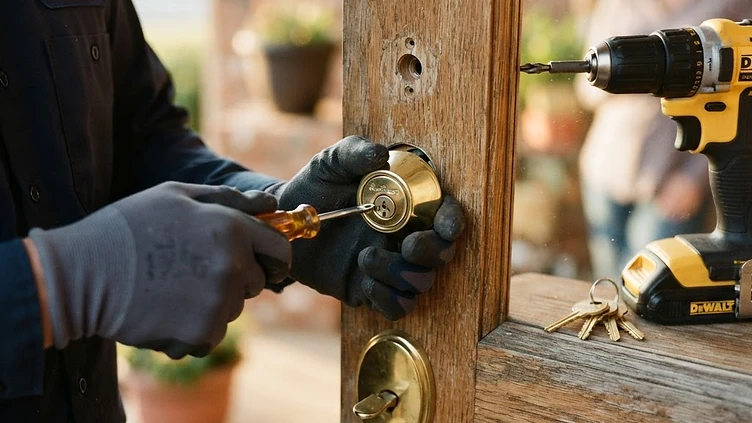
A residential lock is a small assembly of parts doing a simple job, and when it fails you can usually tell what went wrong from how it fails. The symptom points to the cause, and the cause decides whether it's a five-minute adjustment or a new cylinder.
Find your symptom, then read the section.
The key goes in but won't turn
Four usual causes, in order of likelihood:
The wrong key or a worn key. Try a spare or a newer copy. A key worn smooth stops lifting the pins. Cheap duplication compounds the wear, so a new key cut from the original code is often the fix.
The door has shifted. Texas heat and humidity swell wood, and a door that binds against the strike will also bind the latch. Push the door in or lift it while turning the key; if it works, the problem is alignment, not the lock.
The lock is dry or dirty. Dust and old lubricant make pins sticky. A PTFE or graphite-free dry lubricant in the keyway helps; WD-40 as a long-term solution attracts dirt and makes things worse.
The cylinder has failed. If the key is known-good and the door is aligned and the key still won't turn, the cylinder is worn or damaged and needs replacing or rekeying.
Our guide to what to do when a house key won't turn walks through the checks in order.
The key turns but the door won't open
This one is usually not the key. If the knob or lever turns freely with no resistance and nothing happens, the latch isn't retracting: a broken tailpiece, a stripped spindle, or a latch that's stuck in the frame.
If there's resistance and the door pushes out slightly but won't swing, the deadbolt is still extended or the door is warped and binding at the top corner.
If both the knob and deadbolt turn but the door won't budge, someone may have re-locked a separate security bolt, or the frame has swollen. Don't force a lever handle; that bends the internal mechanism and turns a small repair into a hardware replacement.
The lock spins freely
A key or knob that turns with no engagement, in both directions, is a broken tailpiece or a disconnected spindle inside the lock. Two implications:
- The door may not be secure, because the latch isn't moving.
- If it's a deadbolt spinning with the bolt extended, you're on the wrong side of it.
Treat a freely spinning lock as a security failure, not a nuisance. It's also a common sign of an attempted break-in, so check the door edge and frame for pry marks.
The door won't stay closed, or latches by itself
A strike plate that's out of alignment is the usual cause. The door closes, the latch rides over the strike, and either it doesn't catch or it catches halfway and pops open.
The fix is adjusting or replacing the strike, sometimes with a larger plate if the frame has moved. A door that latches by itself and locks you out is the same problem plus a spring latch, and it's worth converting to a keypad or adding a key routine. Our house lockout page covers what to do in the moment.
The deadbolt is hard to throw
Resistance when turning the thumbturn, especially as the bolt approaches the frame, means the bolt is dragging on the strike. Causes: the door has sagged, the strike was installed slightly high, the bolt is dry, or the door has swollen with the season.
Left alone, this wears the thumbturn mechanism and eventually breaks the tailpiece. A locksmith can re-align the strike and check the hinge side, which is often where the sag started.
The deadbolt throws but the door isn't secure
The bolt goes into the frame and it still doesn't feel right. Look at where the bolt lands: if it's engaging only trim, the door isn't actually secured, and a solid push will defeat it. Correct strike reinforcement, or a deeper strike box, is the fix.
The lock is loose or wobbly
Screws work loose over years, and on some doors the screw holes are stripped. Tighten first; if the screws spin, a longer screw or a proper repair is needed. A wobbly lock is easier to force, so this is worth fixing even if it functions.
The key broke off in the lock
Don't dig at it. A broken key body is a job for extraction tools; a paperclip usually pushes the piece deeper and can damage the pins. We cover this in detail in what to do when a key breaks in a lock, including what not to try.
The lock works inside but not outside
Usually a deadbolt that's been fitted with a thumbturn inside and a key outside, where the outside cylinder is worn or the wrong key is being used. If the outside key is the original and the inside works, the cylinder is the problem.
Occasionally it's a rekey that was never finished: a new cylinder on one side and an old one on the other. That's a two-minute check for a locksmith and a confusing week for a homeowner.
Repair or replace?
| Situation | Verdict | | --- | --- | | Misaligned strike, loose screws, dry cylinder | Repair | | Worn key, single bad copy | New key from code | | Spinning lock or broken tailpiece | Repair or replace the lock body | | Forced entry, damaged frame or cylinder | Replace | | Builder-grade hardware on a primary entry | Upgrade |
Repair is usually cheaper and preserves your key schedule. Replacement makes sense when the hardware was inadequate to begin with or has been physically damaged.
When to call a pro
Call a locksmith when a key won't turn after basic checks, when a lock spins, when the door won't latch, when the deadbolt drags and the door has moved, or when a key is broken off. A technician can also tell you in one visit whether the door itself needs adjusting, which is often the real problem. Our lock repair service handles all of the above, and our residential page covers rekeys and installs.
FAQ
Why won't my key turn in the lock anymore?
Most often a worn key, a door that has shifted with the seasons, or a dry cylinder. Try the spare and lift the door slightly while turning before assuming the lock has failed.
Should I use WD-40 in a lock?
Not as a long-term fix. Use a dry PTFE or purpose-made lock lubricant; oil-based sprays collect dust and gum up over time.
Why does my lock spin and not open?
A broken tailpiece or disconnected spindle inside the lock. It's also a security risk, so get it repaired rather than just working around it.
Can a locksmith fix a door that doesn't line up with the lock?
Yes. Strike adjustment and hinge checks are routine, and they're usually the correct fix for a door that won't latch or a deadbolt that drags.
Match the symptom to the fix before buying hardware. Call DFW Key Master at (682) 666-2966 for residential lock repair.