Sure-Shot Benefits of Using a Professional Auto Locksmith
October 17, 2026 · DFW Key Master Team · 5 min read
An auto lockout or a lost key looks like a small problem until you're standing in a parking lot realizing the coat hanger in your trunk is a bad idea. The case for a professional automotive locksmith isn't that they're the only option; it's that the alternatives cost more once you count damage, time and tow bills.
Here's what you're actually paying for.
Damage risk drops to near zero
This is the big one, and it's the one people underestimate. Modern car doors have airbag sensors, wiring harnesses, weather seals, plastic trim clips and glass that's thinner than it looks. The common DIY methods — wedging the frame with a screwdriver, bending a door top with a wedge, fishing with a bent wire — damage at least one of those.
A trained technician uses long-reach tools inserted between the glass and the seal, or a controlled wedge with a protective sleeve, and knows where the linkage is on your specific model. Replacing a door seal is a modest repair. Replacing a window regulator, an airbag sensor or a door panel because someone pried it is not.
The tools match the vehicle
There is no universal car opening tool set. Door geometry changes between makes and model years, and linkage design changes with it. A professional carries several long-reach designs, wedges, a scope camera, and the reference knowledge for what works on a Camry versus a Silverado.
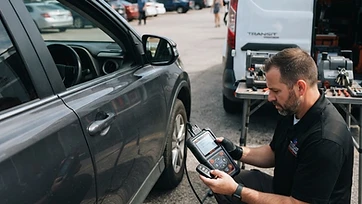
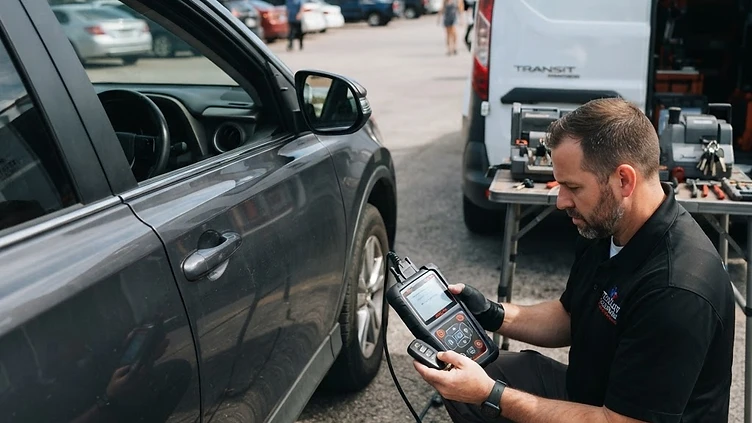
The same is true of keys. Cutting a modern key blank needs the correct machine and blank; programming needs a diagnostic tool with current software and, often, a security access subscription from the manufacturer. None of that is a one-time purchase, which is precisely why the trade exists.
Keys are cut and programmed on site
For most vehicles, a mobile locksmith can cut a key from the VIN or the lock code and program the immobilizer in your driveway. That's a meaningful difference from the dealership path, where a car that won't start must first be towed.
It also matters for partial jobs. Pickup trucks, fleet vans and work vehicles often need a duplicate key made at the job site rather than a day at a service department, and a mobile tech can usually handle that between calls.
Availability at the hours things actually go wrong
Keys get lost at night, in the rain, in a parking garage at 11pm, at a rest stop on I-20. A dealership service department is closed. A locksmith who runs overnight dispatch can be there in under an hour and opens the car without drama.
That availability is also why a genuine 24/7 number is worth checking in advance. Ask whether the phone is answered by a person and whether the after-hours rate is quoted upfront.
Paperwork that protects you and the car
Every legitimate automotive locksmith asks for proof of ownership before cutting or programming a key: your license plus a document linking you to the VIN. That protects you from someone else ordering a key to your vehicle, and it protects the technician from being party to a theft.
They also carry liability insurance for the vehicle they're working on, which is the difference between "we'll take care of it" and an actual mechanism for taking care of it. This is one of the four things we say to check before hiring anyone, covered in our vetting checklist.
Warranty on the key and the programming
A new fob from an online marketplace often arrives with no recourse if it won't program. A professional supplies and warranties the part: if the key fails to program, or stops being recognized a week later, they come back and fix it.
Ask the question before the work: what's covered, for how long, and who pays for a return visit. A shop that answers that clearly is a shop that plans to stand behind the job.
Speed, in practical terms
Opening a car is usually a few minutes of work for someone who does it daily. Programming a key typically takes longer than the entry, depending on the manufacturer's security access. If you've lost all keys on a late-model vehicle, the job can be an hour; the alternative is a tow plus a day without a car.
In a Texas summer, that speed isn't a luxury. A car sitting in an unshaded lot at 100°F isn't a place anyone wants to wait for a slow process.
When DIY does make sense
Almost never, with one exception: an older vehicle with a plain metal key and a wide-open lock, where a locksmith visit costs more than the vehicle is worth. Even then, we'd argue for a spare key made in advance rather than a DIY entry. For anything with a transponder, a fob or an electronic lock, DIY entry is how people break trim and how people lock themselves out of the immobilizer.
When to call a pro
Call when a key is locked inside, when all keys are lost, when a fob stops being recognized, when the ignition won't release a key, or when you need a spare made. Our automotive team covers mobile lockouts and key programming across Dallas, Fort Worth, Irving, Arlington and Grand Prairie, day or night.
FAQ
Can a locksmith really make a key without the original?
Yes, for most vehicles. With proof of ownership and the VIN, a locksmith can cut a key to the vehicle's lock code and program a new chip. A few very recent or high-security models still require the dealer.
Will my alarm go off if a locksmith opens my car?
Probably, and it doesn't matter. The alarm stops once the vehicle is started with a working key, and the technician deals with it as part of the job.
Is a mobile locksmith more expensive than a dealer?
Not usually once you add a tow, a day without the car, and diagnostic fees. Ask for the total including programming before dispatch.
Do I need to be present while the work happens?
Yes. They'll need your ID, the vehicle documents and access to the car, and you'll want to test the key before they leave.
One call, no tow, no damage: that's what the professional option buys. Call DFW Key Master at (682) 666-2966.