Tips to Fix a Loose Doorknob Handle
November 8, 2026 · DFW Key Master Team · 5 min read
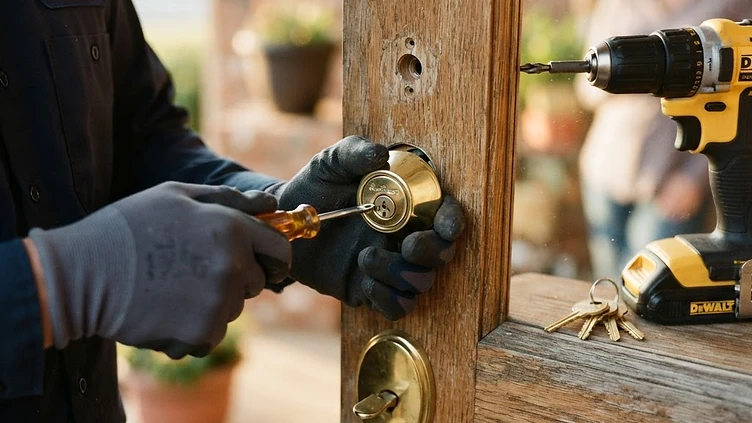
A doorknob that wobbles is one of the few home repairs that's genuinely a five-minute job, and one of the few where people keep meaning to fix it for a year. It's also a security issue: a loose knob is easier to force, and a loose deadbolt can fail to throw.
Here's how to work through it, from the easiest cause to the ones that mean replacement.
First, work out what's loose
Grip the knob and try four movements:
- Rock it up and down. Movement means the rose or the mounting plate is loose, or the spindle has play.
- Turn it slowly. If it turns freely without engaging the latch, the spindle or the internal mechanism has failed.
- Push and pull it in and out of the door. That's a loose mounting or missing screws.
- Compare with the latch. If the knob is tight but the latch is sloppy, the problem is inside the lock body, not the trim.
That tells you whether you're tightening, repairing or replacing.
The tools you actually need
A Phillips screwdriver (usually #2), a small flathead, possibly a hex or Torx key for a set screw, and a flashlight. That's it for a standard knob. A lever handle often uses a hidden set screw underneath the lever, which is where people get stuck.
Step 1: the visible screws
On most knobs, two screws hold the interior rose (the round plate) to the lock body. Tighten those first, in a cross pattern rather than one all the way.
If they spin without ever getting tight, the holes are stripped. That's the next problem, not a screwdriver problem.
Step 2: the rose and the mounting plate
On a knob set, the decorative rose may snap or twist off to reveal the mounting plate and screws. On a lever set, there's often a small button or a set screw on the underside of the lever that releases it, and then a cover plate to remove.
Once it's off, tighten the screws holding the plate to the door. This is where most wobble actually lives. If the door is hollow with no reinforcement, the screws may have nothing to bite; that's a case for a new lock or a reinforcement plate.
Step 3: the spindle and set screw
A knob has a spindle through the lock body, held by a set screw on the knob. Loosen it, slide the knob to the right position, and tighten. If the spindle is worn flat on the corners, no amount of tightening will take out the play; the set is done.
On a lever, the same set screw is usually hidden underneath, and it needs a hex key. Tighten it firmly but don't strip it.
Step 4: stripped screw holes
Here's the fix that gets the most mileage. If the screws won't hold:
- Longer screws, if the hole goes deeper than the screw reaches; often they'll bite into wood behind the damage.
- The toothpick and glue method. Pack the hole with glued wooden toothpicks or matchsticks, let it cure, then re-drive the screw. It's a real repair, not a trick, and it holds well for a light-duty plate.
- A reinforcement plate for a strike or a hinge, which is the proper fix on a door that's taken a hit.
If multiple holes are stripped, the door has probably been forced or the hardware was undersized. That's a good moment to have it looked at rather than shimmed indefinitely.
Step 5: reinstall and check alignment
Reassemble, then close the door and test:
- Does the latch click into the strike without pushing hard?
- Does the deadbolt throw with light thumb pressure?
- Does the knob rattle when you push the door from outside?
If the latch now catches on the strike plate edge, the hardware has moved slightly and the strike needs adjusting. A door that binds will loosen the knob all over again within months.
When tightening won't help
- The knob turns without moving the latch. A broken spindle or internal mechanism; the lock body needs replacing.
- The knob or rose is cracked. Die-cast zinc cracks and can't be repaired.
- Loads of play in the latch itself. The lock body is worn out.
- The door itself is damaged around the lock, or the mounting hole is oversized.
- The set screw hole is stripped on a lever.
The good news is that replacing a knob or lever is inexpensive, and a locksmith can key the new one to your existing house key so you don't add another key to the ring.
What about a loose smart lock or handle set?
Smart locks use a mounting plate and often a set screw under the interior cover. The same diagnostics apply, with one addition: check that the interior cover is fully seated, because a partly clipped cover feels exactly like a loose lock. If the lock is a handle-set style, the lever set screw is the usual culprit. Our guide to installing a smart lock covers compatibility issues that cause ongoing looseness.
Prevention
- Tighten hardware once a year, along with smoke alarm batteries.
- Don't hang a bag or a towel from a lever; that's how set screws work loose.
- Use a striker plate that's properly aligned; a door that needs a shoulder to close is loosening something every day.
Our door lock problems guide covers the other symptoms, including spinning cylinders and deadbolts that drag.
When to call a pro
Call a locksmith when the knob is loose because the door or frame is damaged, when the lock body itself has failed, when you want the replacement keyed to your existing key, or when a loose lock has been accompanied by pry marks. Our lock repair service covers adjustment and replacement, and our residential page lists everything else.
FAQ
Why does my doorknob keep coming loose?
Usually the mounting plate screws are working loose, or the screw holes in the door are stripped. If the door binds on the strike, it'll loosen again after every fix.
How do I tighten a lever handle?
Look underneath the lever for a small set screw, usually needing a hex key. Tighten it, then check the cover plate screws behind it.
Can I fix a stripped screw hole in a door?
Yes. Longer screws often work, or pack the hole with glued toothpicks before re-driving. A reinforcement plate is the proper fix on a strike or hinge.
When should a loose doorknob be replaced?
When the knob turns without operating the latch, the body is cracked, or there's play in the latch itself. At that point it's a hardware failure, not a loose screw.
Two screws beat a new lock. Call DFW Key Master at (682) 666-2966 if it needs replacing.